
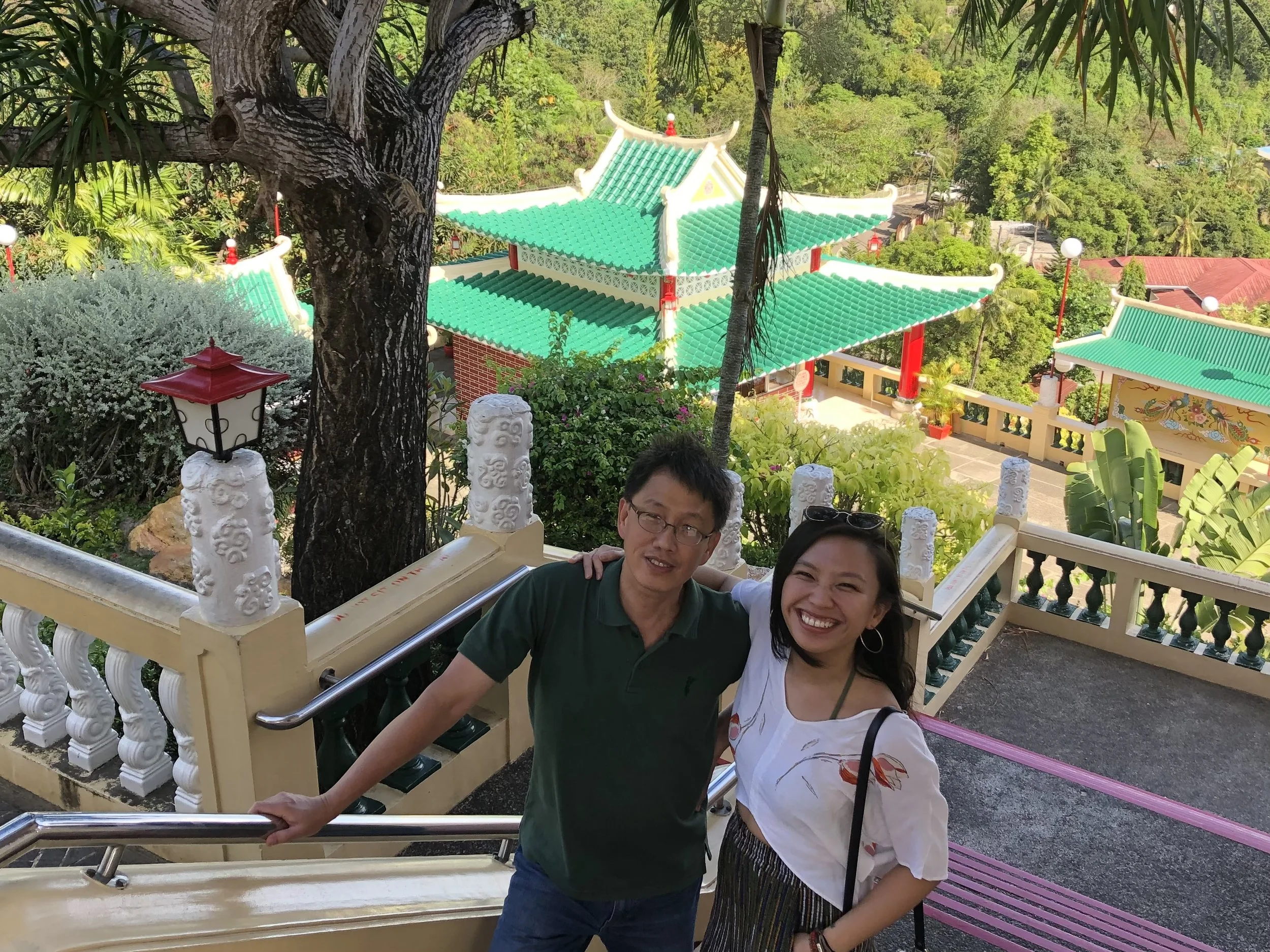
Since founding Living Hyphen back in 2018, I’ve spoken and written a lot about my experiences as a Filipina-Canadian and the push and pull I’ve felt about living in between these two cultures. But here’s the thing I don’t talk about often – my dad has always been upset about that.
He’s given me a lot of flak over these past few years for always dropping “Chinese” in my hyphens when I talk about my identity.
“Why are you ignoring your Chinese side? You’re a Yu!” he’d often chide me.
“But you never taught me anything about being Chinese! I can’t claim it!” I’d snap back.
The truth is that I grew up largely disconnected from my Chinese heritage. My Angkong, who fled China during the rise of communism and migrated to the Philippines, passed away before I was born, and I didn’t spend much time with my dad’s family growing up. We never celebrated Lunar New Year, I never learned Fukien (also known as Hokkien, the most common language of Chinese Filipinos), and my dad didn’t really practice any Chinese traditions when I was growing up (except maybe that short-lived phase when he became obsessed with feng shui).
Since I started Living Hyphen though, my dad has been going on his own journey of unravelling the knots of his identity, and in turn, my own. He’s been on a mission to share more about our Chinese heritage with me.
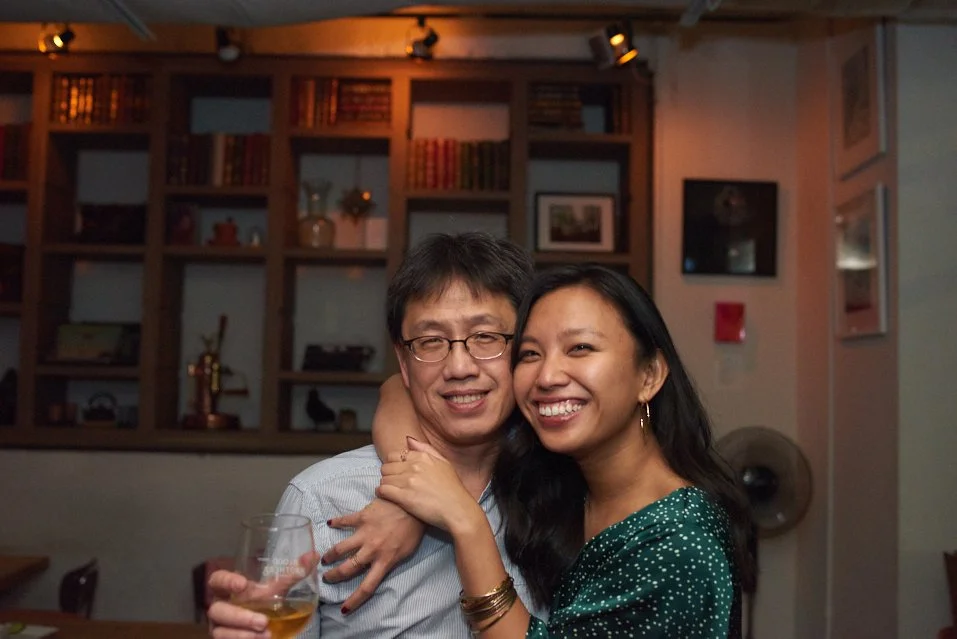
Papa Yu & I at the launch of Living Hyphen in 2018.
Learning From & About Papa Yu
When I returned home to the Philippines in 2019, he took me to the Taoist temple in Cebu that he would frequent when he was growing up. My dad shared things with me he never did before – like how he used to practice Kung-fu and take part in dragon dancing during his teen years. How did I not know any of this before?! We even met with an elder at the temple who gave me a Chinese name after my aunts answered his questions about my birthday, our family name, and some other personal details that were lost to me in translation.
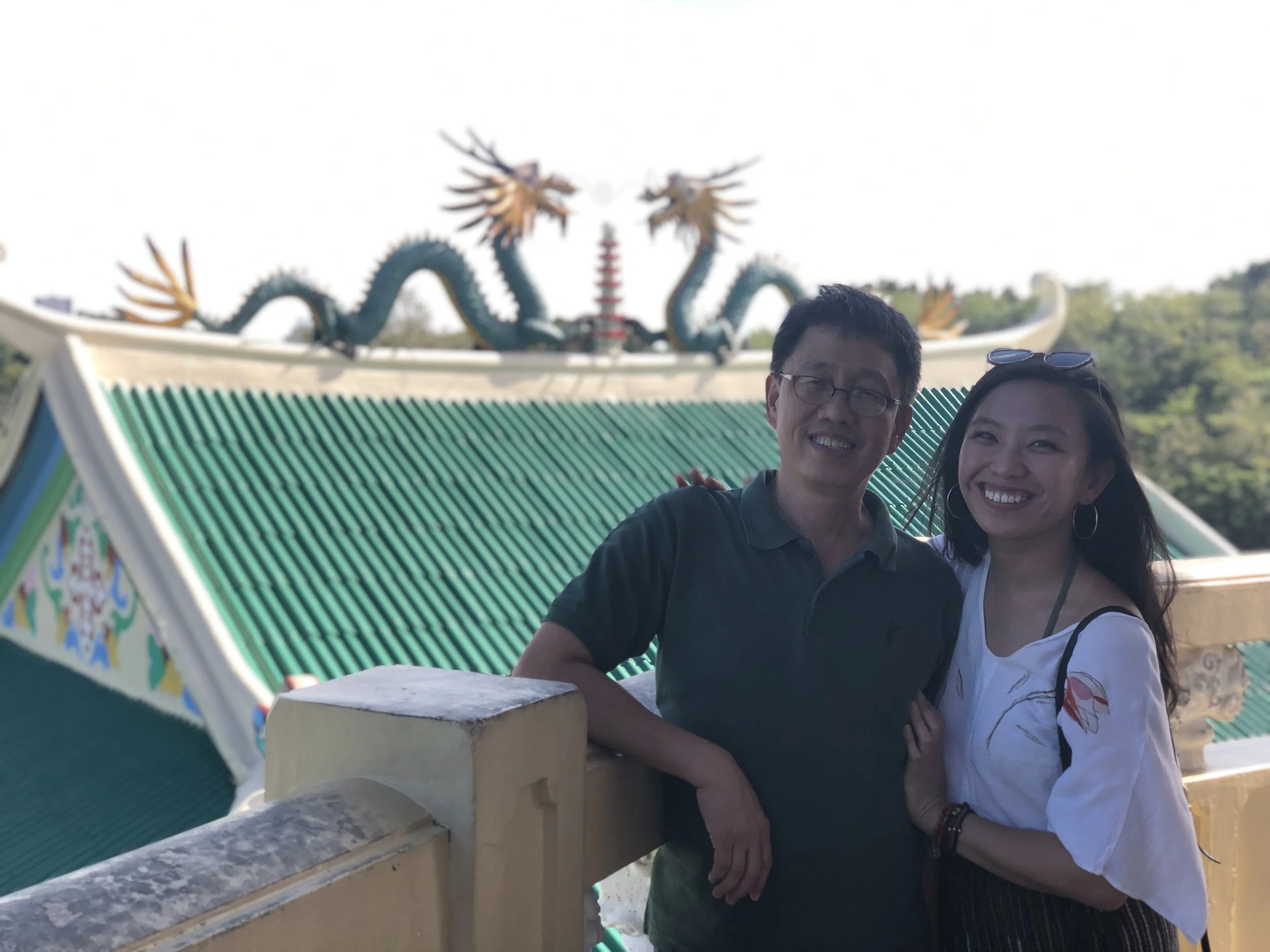
Papa Yu & I at the Taoist Temple in Cebu, Philippines
My cultural learning was interrupted – as everything was – in 2020 during the COVID pandemic, and I had to find new ways to get to know my dad. So we organized a standing date for ourselves. Every Wednesday morning, we would get on a video call, and I would interview him about what he knew of his grandparents, who his parents were, what his childhood was like, and the Chinese traditions he grew up with, if any.
This involved a lot of laughing and prodding and rapid-fire questioning to get this otherwise emotionally closed man to dig, dig, dig. It also surprisingly included a lot of Googling as we tried to find on the map where his father and mother grew up, or as we triangulated the events of his childhood, as he remembered them mostly through world events.
We uncovered so much together about our shared roots, and we continue to unravel even more together.
OUR UNEXPECTED Connector: Mahjong
Fast forward a few years, and these Wednesday dates continue, though they look a little different now.
Instead of video calls, we started learning how to play mahjong, the beloved parlour game that was developed in Southern China in the mid-1800s. Last June, while scrolling on Instagram, I found All Flowers Mahjong – a community social club in Toronto’s Chinatown dedicated to teaching mahjong and playing in a beginner-friendly environment. That’s when our new beloved weekly tradition was born.
Every Wednesday since then, my dad and I would meet up in Chinatown, grab some soup dumplings from Juicy Dumplings, walk across the street and up the three flights of stairs to the Wong Association, and eagerly grab a table awaiting some familiar or new faces to join us for a friendly game of mahjong.
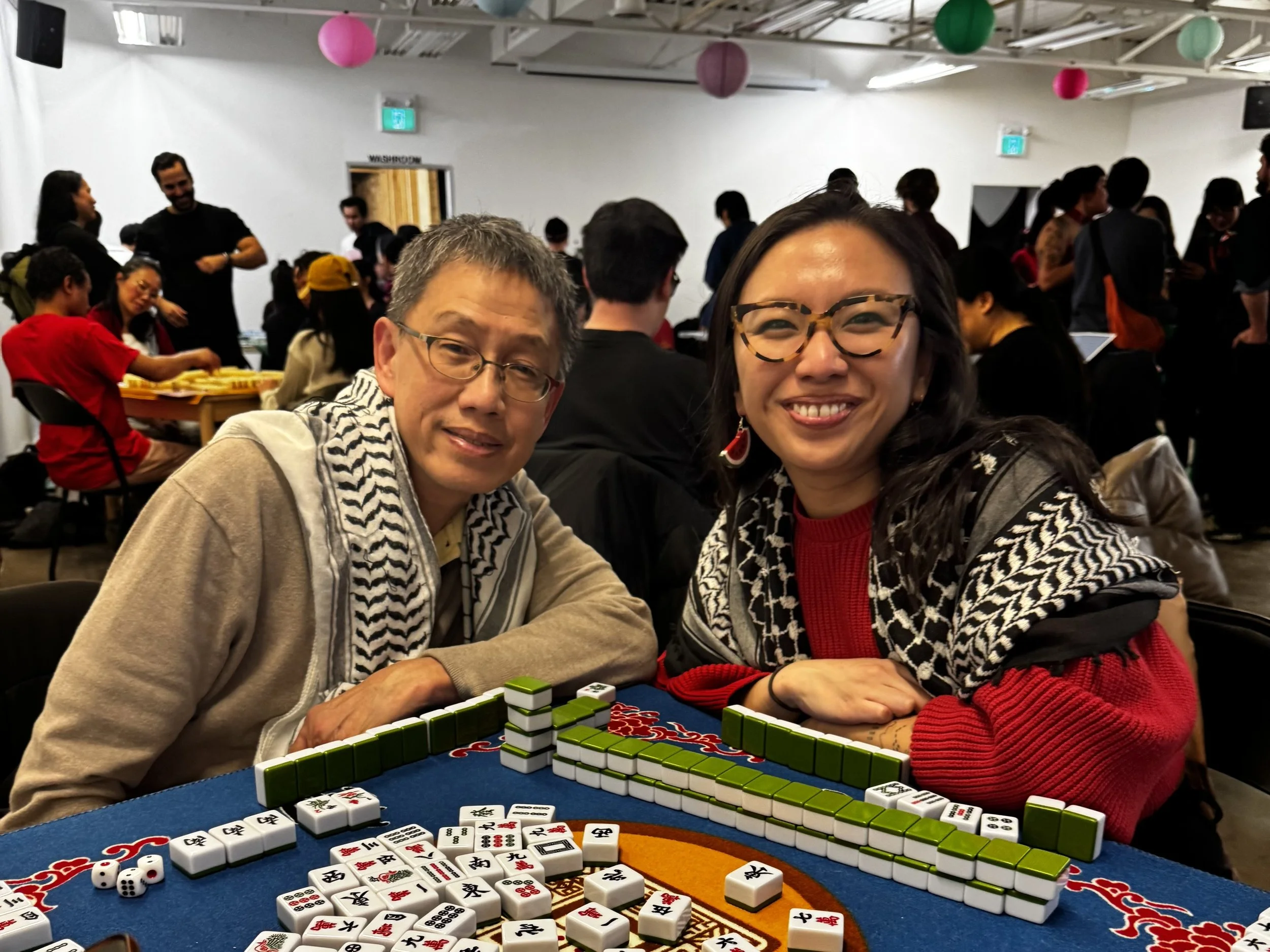
Papa Yu & I at Mahjong for Gaza, a mutual aid fundraiser for Gazan families.
Washing the tiles, watching my dad try to stack one row of tiles on top of the other (and failing), learning the Chinese characters, and slowly playing with points – all this has been such a meaningful and fun way to connect not just to our heritage, but to each other.
We Invite You to Play Mahjong With Us!
Living Hyphen is co-hosting a special Wednesday mahjong night with All Flowers on June 10 called Titas, Titos, Ti-Theys!
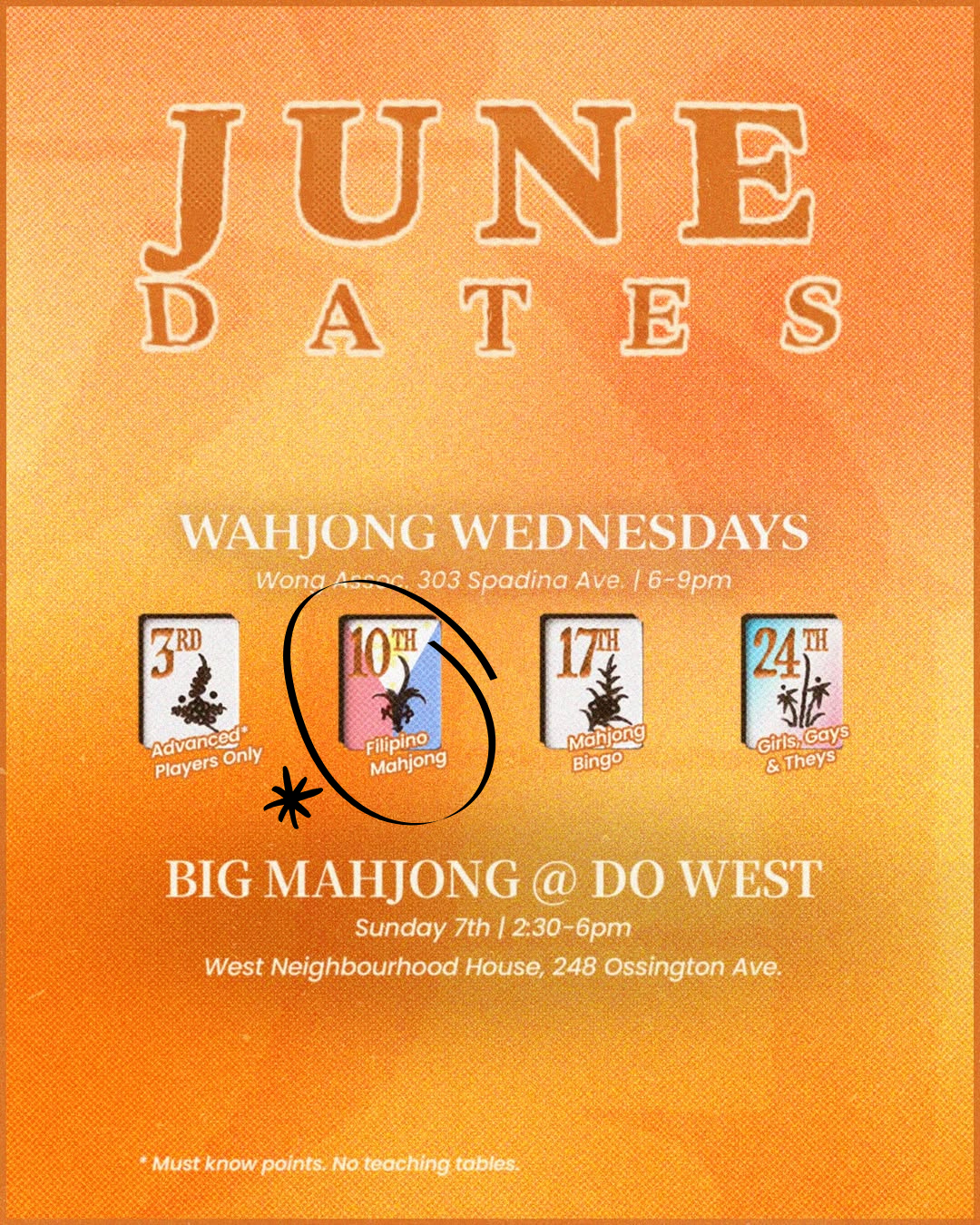
Tita, Titos, Ti-theys is dedicated to learning and playing Filipino-style mahjong with beginner-friendly teaching tables, community facilitators, and music all throughout the night. Whether you grew up around the game or are completely new, everyone is welcome at the table.
It brings me so much joy to proudly bring all of my hyphens together: Filipino-Chinese-Canadian.
And yes, JD (Justine’s Dad, as he likes to be called) will be there!
Hopefully, I’ll be doing him proud with this more complete expression of who I am and an honouring of our shared lineage. I hope you’ll be there to join us too!
Here’s to continuing to unravel all of the knots of our identities through visits to the homeland, video calls, and (not so) simple parlour games.