
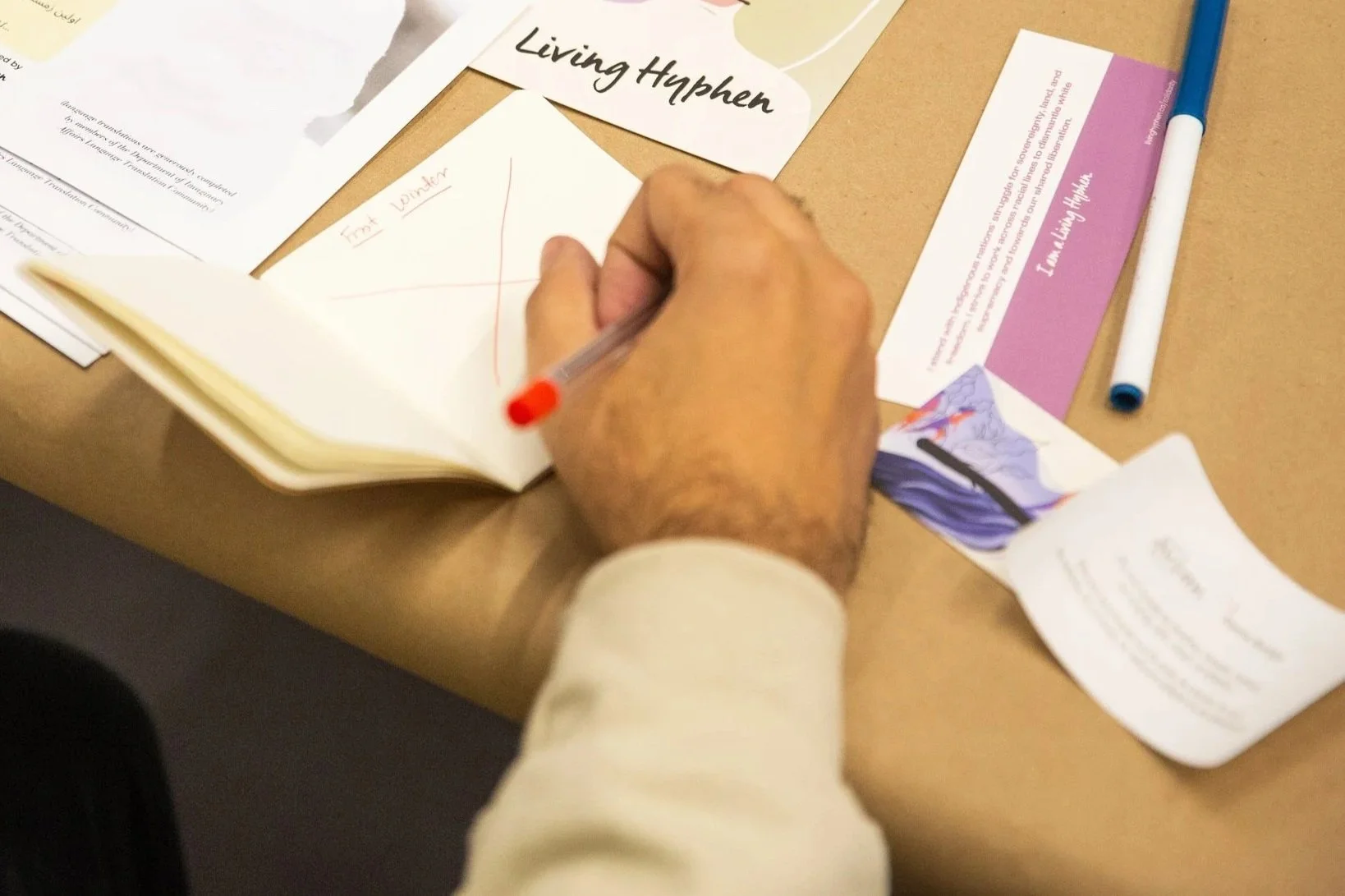
Music is an absolute must in every Living Hyphen gathering, especially for our writing workshops. I love to play upbeat songs as soon as people walk into the space. It’s my way of welcoming everyone into the room and signaling that this isn’t just any ol’ workshop. It’s my way of easing the nerves that might come from entering a space where you don’t know anyone or are being asked to do something you might not be entirely comfortable with. It’s my way of building trust right from the get-go and finding some point of connection.
And I have never seen more appreciation for this than during my time inside writing with incarcerated men.
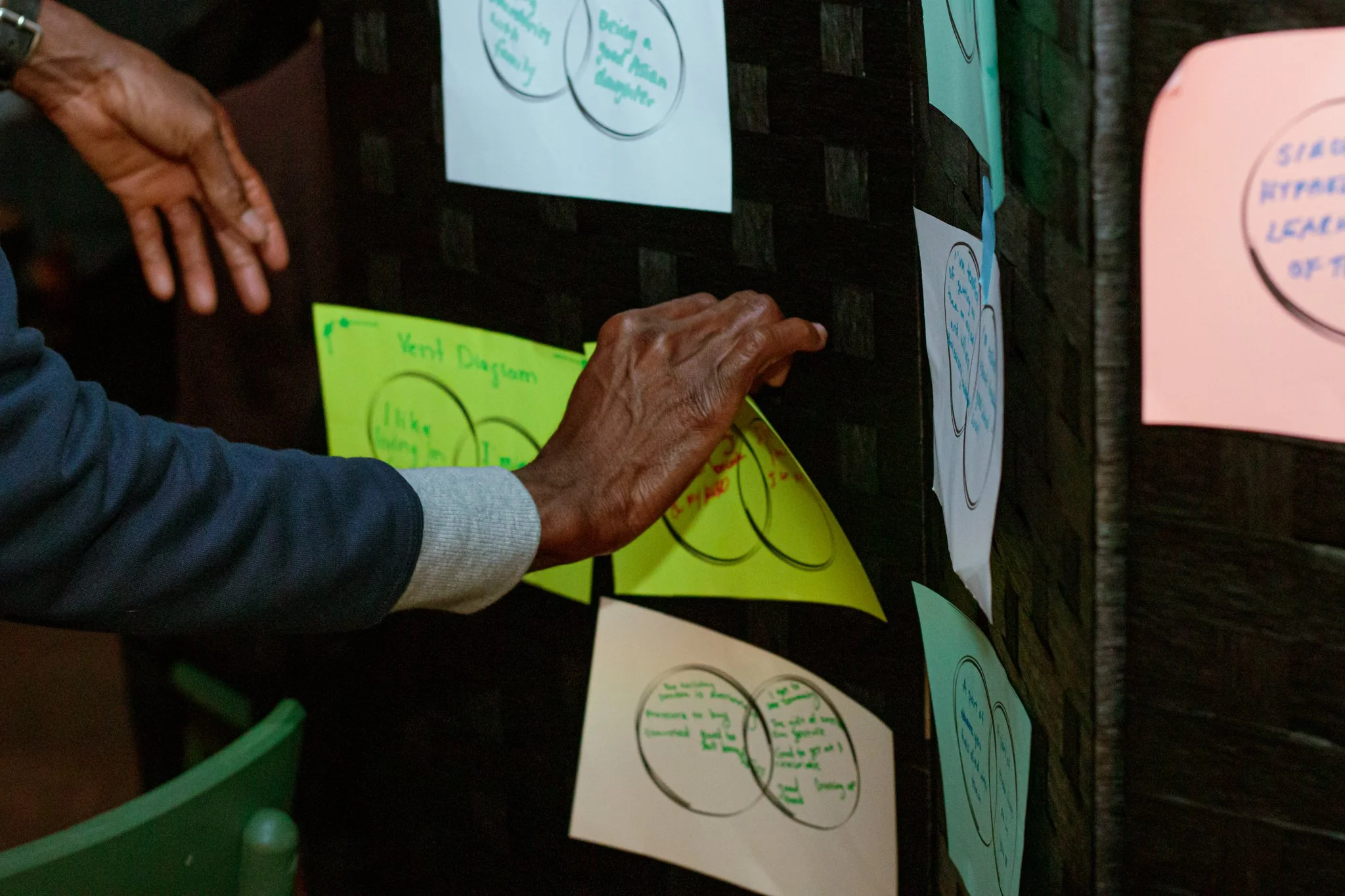
In my very first session, I remember the men walked in, curious about/skeptical of/intrigued by (or all of the above) the room they were entering. Play-Doh and markers on their desks, colourful paper posted up on the walls, music playing in the background, and me…greeting them all with smiles while gently grooving to whatever song might be on.
I remember hearing their murmurs.
“Where is that music coming from? Is it coming from that rectangular thing?!” Dean asked.
Some of these men have been inside for decades; they don’t realize how small our electronics have become.
Music is a conversation starter.
Later, I played quiet instrumental covers of recognizable hits for our writing time. It’s nice ambient music that helps get into a flow state.
“Is that Alicia Keys?” someone asked. “Yeah, that’s Alicia Keys!” another person happily confirmed.
Someone started humming along, and then someone was softly singing the chorus under their breath: "Some people want it all / But I don't want nothin' at all / If it ain't you, baby / If I ain't got you, baby!”
Everyone started smiling and giggling, singing along, and pretending to hit the high notes.
Music is a joy-inducer.
From there, the men kept trying to guess the covers on my playlist, some getting tripped up by samples from older songs.
“That’s Rihanna, SOS!” someone declared. “No, it’s tainted love!” someone else chimed in.
“Wild Thoughts, DJ Khaled.” “Nah, bro, that’s Santana!” And on and on it went.
Music is a generational bridge.
Creating Moments of Choice
I didn’t realize how much these men would cling to the music when I first started doing these workshops. In hindsight, it’s a no-brainer. Who doesn’t love listening to music? Especially if you’ve been deprived of this simple, life-affirming pleasure.
And so the next time I went inside, I asked the men to give me their song requests, and I promised I would find and play those songs for our next session. They were surprised by the ask, doubtful of my ability to deliver on such a promise.
I was determined to make this happen. I wanted these men to experience delight even if only for a short song, and to create a seemingly small, but hopefully important moment of choice. It felt vital to do this in a setting that so actively works to crush both of these central facets of our humanity.
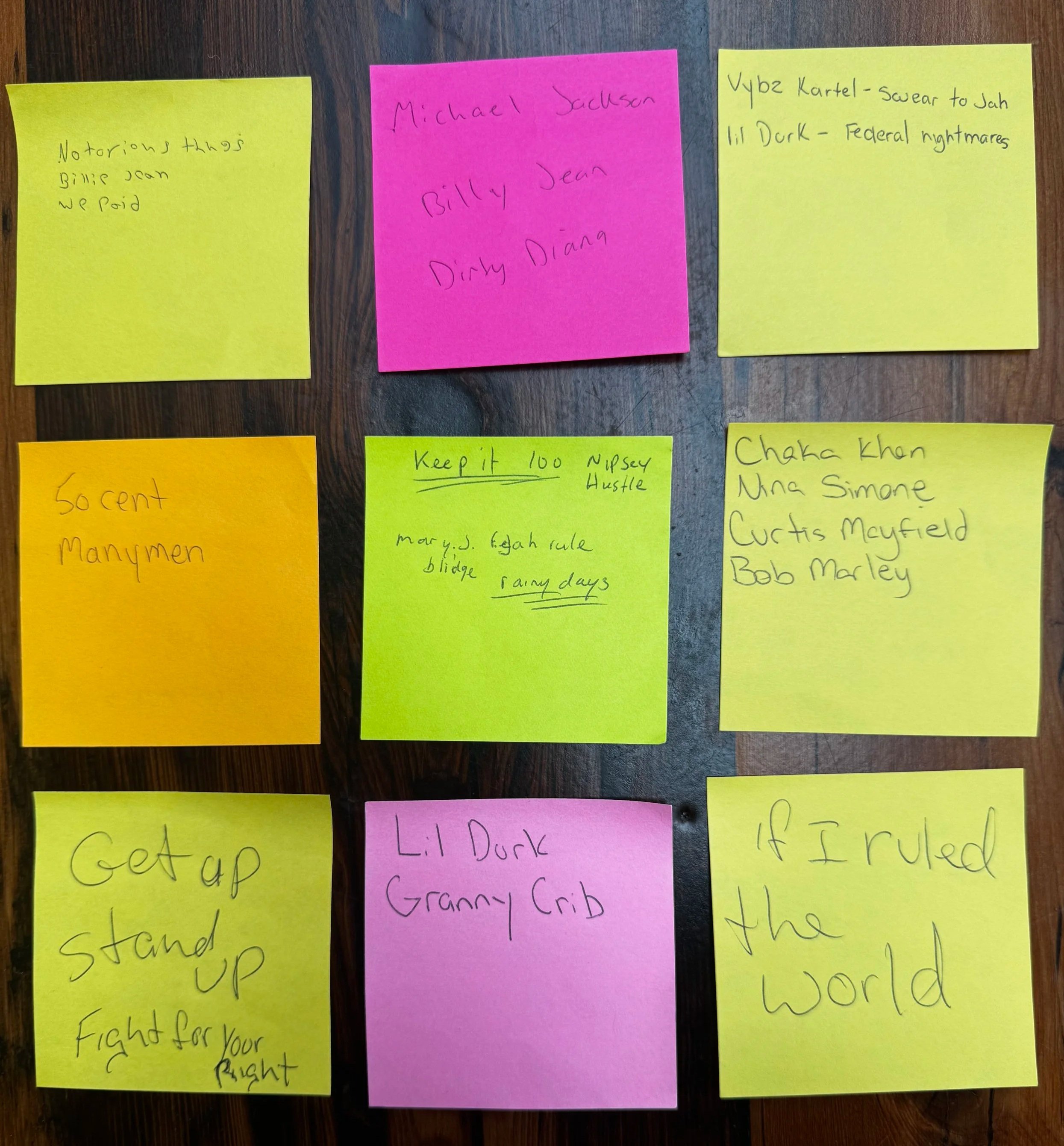
I wish I could capture the sheer joy and happiness that erupted in the room every time I would play their song requests. Just thinking about it is enough to make my heart burst.
“You are the best, miss! Thank you, thank you for playing this song!” George shook my hand with so much gratitude.
“No wayyyyy! I can’t believe you’re playing this right now; I haven’t heard this in years.” Jacob was up out of his seat, dancing.
“Can we play it again, Miss? When are you coming back? Let’s do this again!” Brian begged with the biggest smile on his face.
We played reggae, soca, a lot of rap, and hip hop. But there was jazz too. And country!
Tom requested exclusively country music, and everyone was heckling him, but kindly and joyfully. The guys were razzing each other’s song choices, debating who was the better rapper. They were laughing and singing along. And I was reveling in the pure and unadulterated joy of the moment.
I seriously could have done just that all day – listen to music and simply be together.
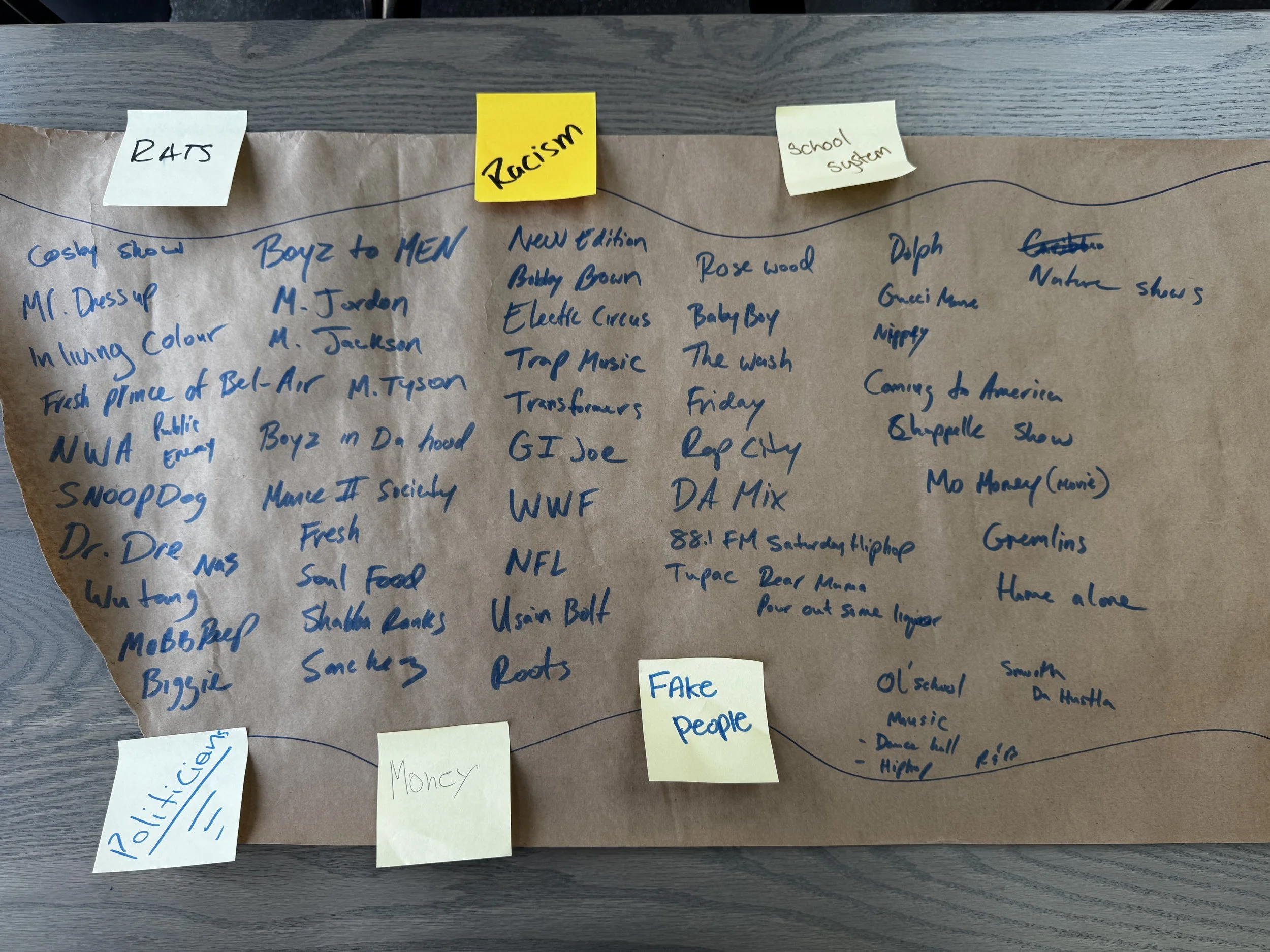
At the end of the session, I asked everyone to “check in to check out,” to share how they were feeling as we were about to leave our space:
“Complete.”
“I forgot for a second where I was. Thank you.”
“Together.”
“It felt like an escape.”
“I felt free even for a moment.”
“Freedom.”
I was, I am floored by these responses.
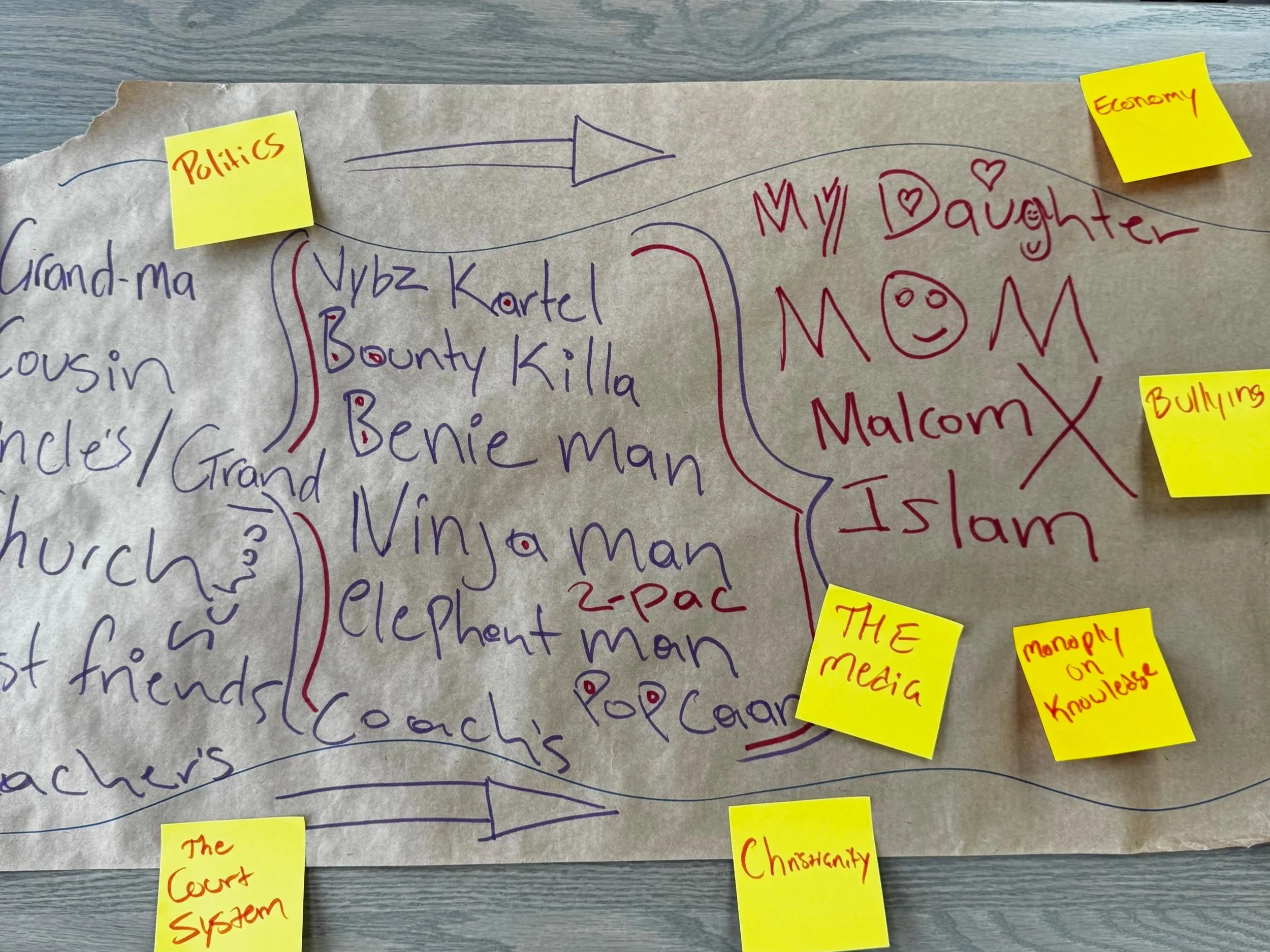
After this experience, I keep thinking to myself…how is depriving people of music doing anything for any of us? How is this accountability? How is this justice? How is this right or morally good in any stretch of the imagination?
This is punishment, not accountability.
This is cruelty, not justice.
It is, very simply put, dehumanizing.
Experiencing Freedom in the Cracks
Today is August 10, Prisoners’ Justice Day (PJD), a day of mourning, resistance, and remembrance to honour all who have died by suicide, medical neglect, and/or violence inside Canada’s carceral institutions.
Today I am thinking of the men I have had the privilege or writing and sharing stories with.
Prisoners’ Justice Day began in 1975 as an act of non-violent resistance by imprisoned people to commemorate the death of Eddie Nalon, who bled to death while in solitary confinement in Millhaven Institution. Since then, PJD has become an international day of solidarity and action to commemorate deaths in custody and to demand an end to the violence of criminalization and punishment.
Living Hyphen’s workshops will not fix the violence and harm of the carceral system. My goal during my time inside is, at the very least, to try to work against those forces by building in as many moments of choice, delight, and connection as possible within our limited time and many, many constraints. My goal is to reconnect to our shared humanity, however brief a moment, however small a gesture.
As the performer, writer, and educator Una Aya Osato says, “it’s about creating cracks that show our bodies that we can experience freedom.”
Living Hyphen’s orientation, our horizon, is and will always be towards abolition – that is, the undoing and unmaking of institutions of the status quo that prioritize and glorify punishment and cruelty, harm and violence.
Living Hyphen’s orientation, our horizon, is and will always be towards abolition – that is, towards the creation of life-affirming forces that bring us all to our full humanity and true liberation.
Our workshops are only a beginning; they are only a crack. But it is in the cracks that the whole thing comes crumbling down.
Any and all names of incarcerated men have been changed.