
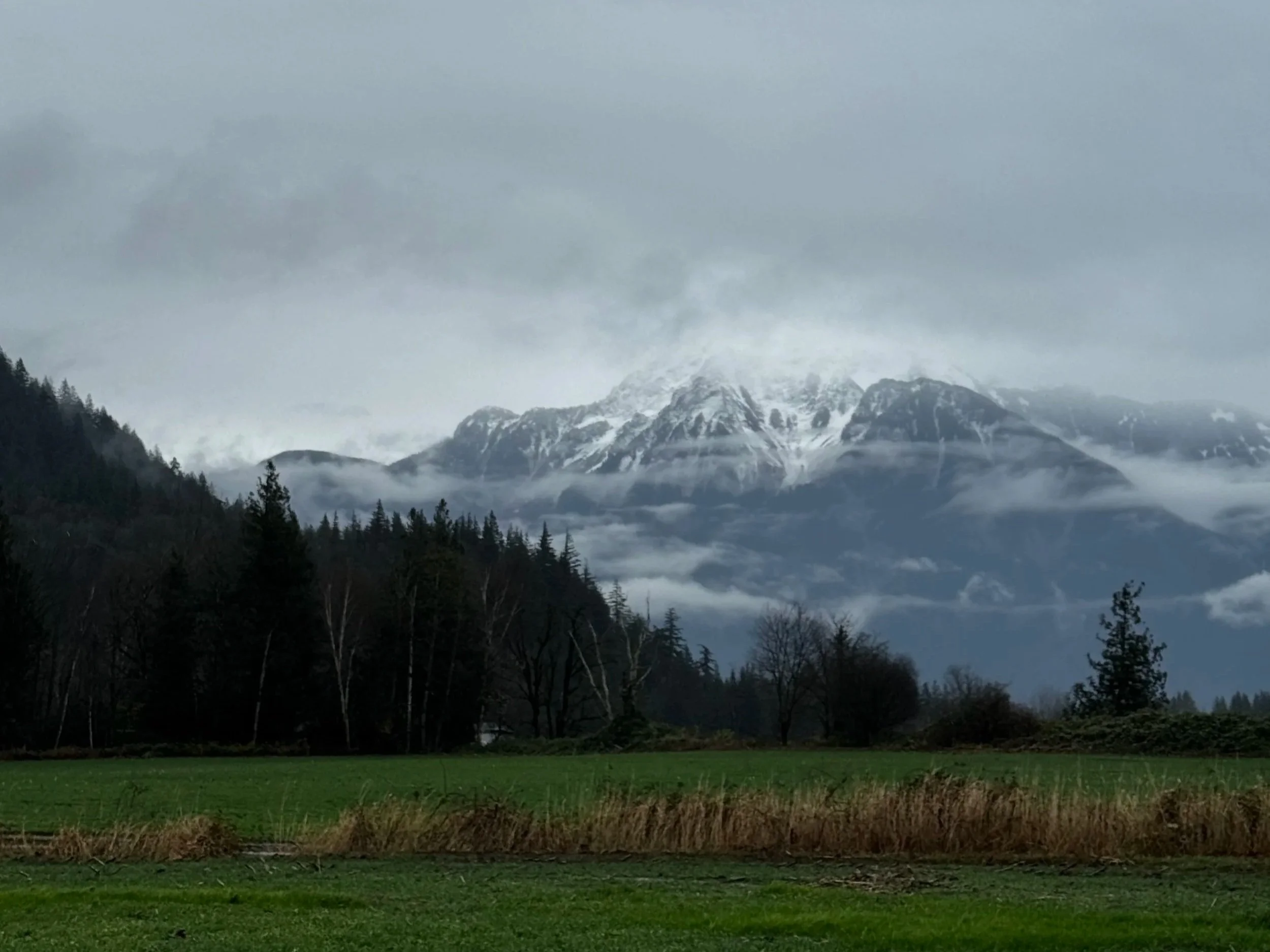
““The scenery here is just unbelievable. Magical. Spell-binding. Majestic. Breathtaking…like, literally breathtaking! I could sit and watch the clouds slowly move across the sky and pass through the mountains all day. I pulled over to the side of an empty road today while driving and just stared at this one mountain…such grandeur. I turned down my music and listened to the rain. To the birds. To the wind.
What a delight, what a wonder!
All this beauty and magic…on my way to the prison.
How jarring, bewildering, and…infuriating…””
I wrote these words in my journal last fall while facilitating writing circles at various federal prisons in Fraser Valley, BC with incarcerated men from Black, Indigenous, and racialized communities. I am thinking about these words again as I am about to make my way back to the West Coast to facilitate another series of workshops exploring our heritage, our ideas of home(s), and what it means to live in between cultures.
I am remembering how I would spend my mornings driving on Highway 7 with the river to one side and the stunning mountains up ahead and all around me. I would spend these mornings just in awe of all that surrounded me, so full of gratitude for the natural world.
And then I would slowly pull up to my destination and see the fences surrounding a cold, sprawling compound of grey, soulless buildings heavily secured with barbed wire. The disconnect was, as I wrote, jarring, bewildering, and infuriating.
I couldn’t help but think to myself about how settlers really saw all this abundant, fertile, beautiful land, stole it from Indigenous peoples, and chose to build systems of control and punishment. And how politicians of today really see all this abundant, fertile, beautiful land, ignore our treaty obligations, and continue to choose to expand these systems of control and punishment. What stunted imagination…
I would then go inside these prison walls and be greeted upon entry by guards looking through my bag, locking up my phone, and asking me to go through a body scanner. I would be escorted through a maze of halls and buildings, barricaded with gates and locks at every turn. A 5-minute walk to my classroom would take us 15 minutes because of all the gates and barriers that required some kind of security clearance.
Again, the disconnect between the wonder that was right outside and the cruelty humans built inside was jarring, bewildering, and infuriating.
As I would settle into the classroom and begin our writing circle, I would kick us off in the same way I would at any gathering: by positioning Living Hyphen’s work and our storytelling as a political act.
“We’re here on the traditional and unceded territory of the Semá:th First Nation and Máthxwi First Nation. Many of us here are settlers – regardless of when we or our parents or grandparents, or however far back our ancestors arrived – who have benefitted and continue to benefit from colonial violence on this land. Colonization is not just something that happened in the past, but an ongoing process that continues this very day to inflict violence on Indigenous lands, cultures, and bodies.
In addition to being on stolen land, what is now known as Canada and the US was built by Black people who were themselves stolen from their own homelands and who continue to be oppressed under this white supremacist system.
Many of us who are from racialized communities come from places around the world whose histories are similarly bound up in colonization, imperialism, military occupations, and racist immigration policies.
My own history as a Filipina speaks to this reality. The Philippines was colonized for 333 years by the Spaniards only to be sold to the United States in 1946. We were then under American colonial rule for another 48 years, and remain under their heavy influence despite our independence.
As we share stories of our home, heritage, and cultures, it’s important to remember just how interconnected all of our histories and continued struggles really are…””
Sharing these words felt especially potent and urgently necessary after going through all that heavy security and being inside with these men.
And my words were met with such fierce recognition and understanding; it would open the floodgates to deeper conversations about race, power, and oppression, and the men would school me in their long, complicated, and nuanced histories.
Ajani gave us all a history lesson on Jamaica's colonial history – how the indigenous Taíno peoples came under Spanish rule for 160+ years before England conquered the island, making his homeland an important part of the British West Indies.
Kiran proudly shared his Punjabi roots and the intense violence that was brutally inflicted on his people as a result of Britain’s callous and truly thoughtless Partition of India in 1947.
Yao spoke at length about the pan-African movement led by Kwame Nkrumah, the first president of his homeland, Ghana, and how that sparked independence movements all across the continent in the 1960s.
Chris reflected on the experiences of his Indigenous ancestors and how his parents were a part of the Sixties Scoop, the wide-scale forced removal of Indigenous children from their homes, communities, and families of birth and placed in foster care or adopted out to non-Indigenous families.
We talked about the myriad of injustices that come from colonization and how that trauma is passed down across generations and impacts our everyday lives in so many ways, seen and unseen. We talked about how much of this inherited trauma has led to the choices they’ve made and their present-day realities in the prison system; how the criminal “justice” and prison systems are themselves born out of colonization.
These discussions would often take longer than our actual writing prompts, but that didn’t matter. In fact, that was the point – to spark a conversation about our complex roots and our heritage. To recognize our histories and understand how it all connects to our present-day circumstances. To find ways to bridge these gaps and begin to create pathways to healing.
Over the years, I’ve been asked to design and deliver anti-racism and anti-oppression trainings for businesses, school boards, and other organizations. So much of these discussions remains on the intellectual, sometimes abstract level. But these guys? They know it in their bones. They don’t need any kind of “training”.
The men inside understood instantly when I talked about colonization and racism and oppression. It is inherent for them. It is lived knowledge. It is in their very bodies.
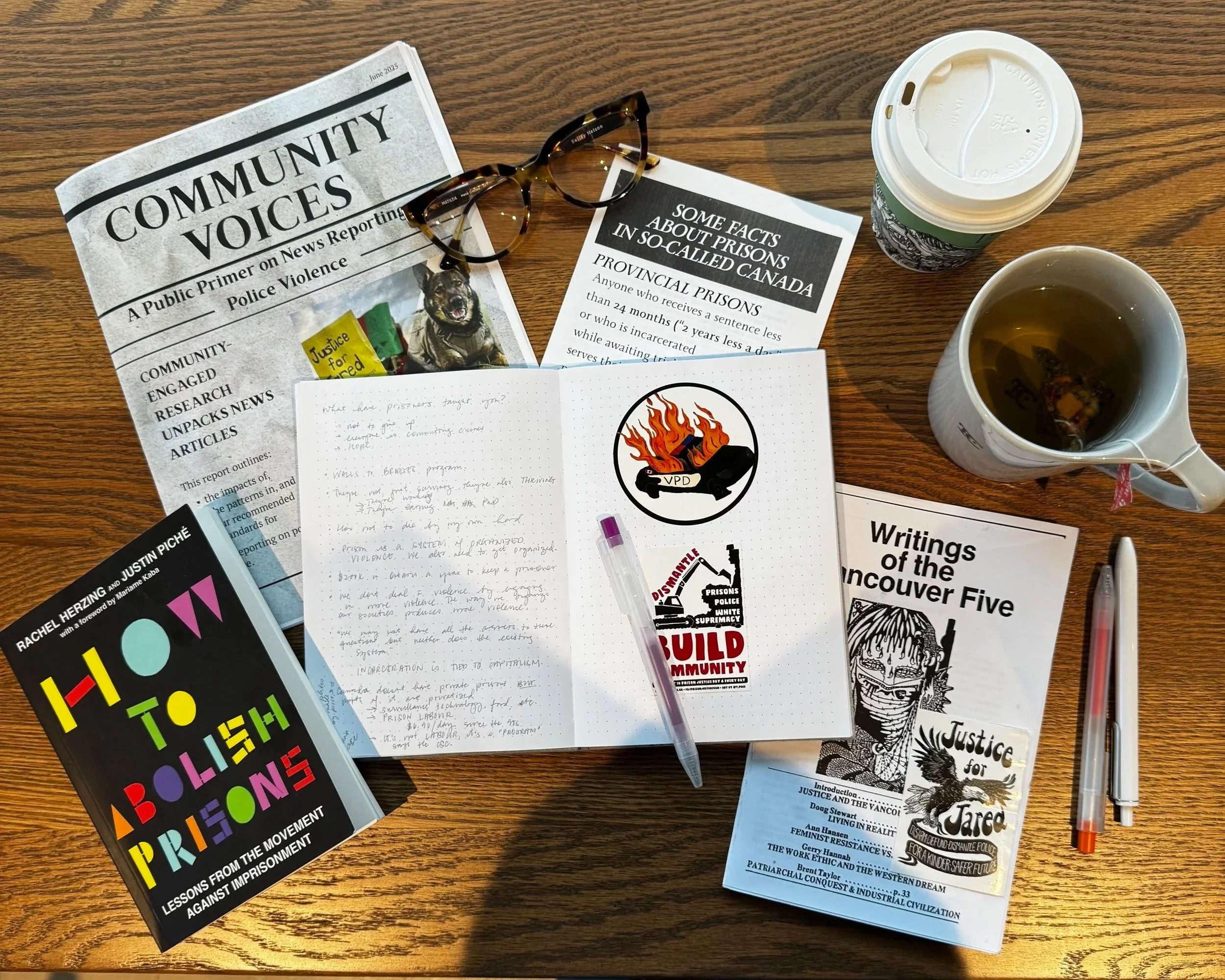
And the intimate stories they shared throughout these writing circles revealed their expertise on the realities of the world we all live in, the realities that tangibly, physically, and materially impact the way we all move through the world. This was not merely an intellectual exercise.
At the end of our time together, I would be led out of the prison maze with every turn guarded by lock and key. After going through the body scanner again, collecting my phone, and being let through one final gate, I would get into my rental car and just sit in the parking lot to take in the day. I looked out at the majestic peaks of the Cheam Range with barbed wires cutting across the foreground, thinking about all the stories that these men shared with me, all the stories that I have the deep privilege of holding.
How jarring, bewildering, and infuriating.
Once again, I come back to the fact that settlers saw all this abundant, fertile, beautiful land, stole it from its original caretakers, and chose to build systems of control and punishment. And the politicians of today really see all this abundant, fertile, beautiful land, ignore our treaty obligations, and continue to choose to expand these systems of control and punishment.
Let me say it again: what a stunted imagination…
I wonder what it would be like if our society took the time to learn from these men and the communities that they come from? What would our world look like if we centred lived experience as expertise and actually took the time to listen to those most deeply impacted by systems of oppression? How differently might we choose to design our world? How might our horizon of possibilities expand and deepen?
I’m headed back to the Fraser Valley this month to share space and stories with these men again. As I drive through the mountains and take in the views of the Fraser Valley, I know I’ll continue to be profoundly affected by the disconnect between all that is possible with the beauty and abundance of our natural world and the scarcity and narrowness that our society chooses.
As I navigate this disconnection, I strive to listen deeply to these men who hold so much knowledge and to honour the stories that they share with me. I look forward to imagining with them the wide horizon of all that is possible.
Any and all names of incarcerated men have been changed.